
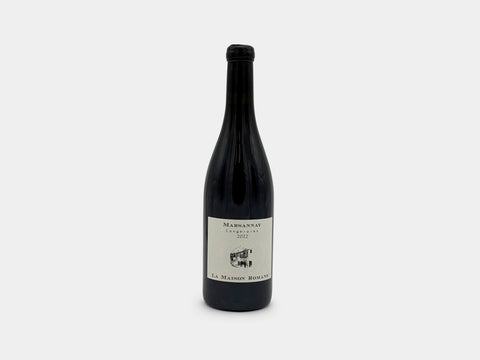

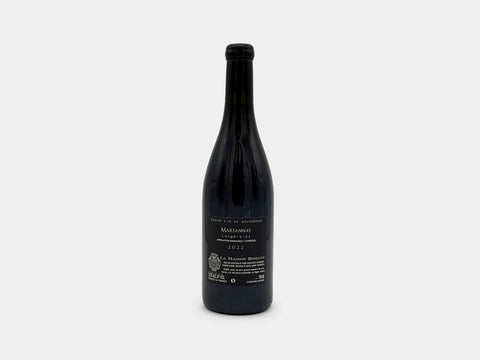

La Maison Romane Les Longeroles Marsannay 2022
La Maison RomaneGrape: Pinot Noir
Vintage: 2022
Type: Red
This organic white-label red wine is a pure varietal expression of pinot noir produced by Oronce de Beler at La Maison Romane. Sourced from the Les Longeroies parcel in Marsannay, the hand-picked grapes undergo a three-week whole-cluster fermentation driven by native wild yeasts. Cellar operations follow strict low-intervention guidelines tied to the lunar cycle, utilizing natural gravity flow instead of mechanical pumps. It matures for twelve months in neutral two-hundred-and-twenty-eight liter barrels before bottling unfiltered with minimal sulfur.
It pours a translucent ruby color, opening with high-toned, juicy aromas of fresh red cherries, wild raspberries, and forest floor. A medium-bodied frame balances crunchy berry fruit with an underlying stony mineral undercurrent. A bright, natural acidity drives the wine, ensuring freshness and structural poise across mid-palate volume. Silky, fine-grained tannins provide a smooth structural grip that coordinates nicely with the fruit. It finishes clean, dry, and persistent, leaving a savory trace.