
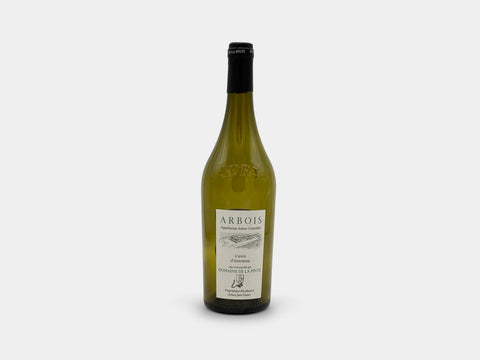

Domaine de la Pinte Arbois Blanc Cuvee d'Automne NV
Domaine de la PinteGrape: Savagnin, Chardonnay
Vintage: NV
Type: White
This white wine is a traditional Jura blend of savagnin and chardonnay from biodynamically farmed vineyards in the Arbois region. The estate manages the vines on blue marl soils, utilizing hand-harvesting and spontaneous native yeast fermentation. The winemaking involves a unique aging process where the wine spends four years in old oak barrels, including extended time under a natural veil of flor yeast. This low-intervention oxidative method allows the structural components to settle naturally.
It pours a deep gold color, opening with complex aromas of preserved lemon, green apricot, honey, and dried herbs. The palate is medium-bodied and texturally dense, balancing a nutty volume with a sharp line of mountain acidity. Savory flavors of walnut shell, sourdough bread, and wet stone dominate the mouthfeel. A pleasant mineral bitterness develops on the back end, adding structural definition to the wine. It finishes completely dry and long, leaving a mouthwatering saline trace.